
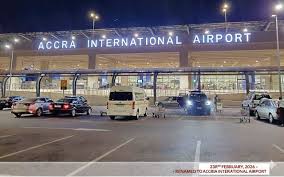

The Kwame Nkrumah Memorial Park has revealed that it played an active role in pushing for the recent change of name of Ghana’s international airport, describing the decision as a necessary step in correcting the country’s historical narrative.
Speaking on the sidelines of a public forum on Ghana’s “Day of Shame” in Accra, the Acting Executive Director of the Park, Dr. Collins Rawlings Nunyonameh, said the institution formally submitted a proposal supporting the renaming, arguing that Ghana could no longer continue to honour figures associated with the overthrow of the country’s first President, Dr. Kwame Nkrumah.
He explained that the Park’s position was based on its mandate to preserve and promote the legacy of Dr. Nkrumah and Ghana’s independence struggle. According to him, it was contradictory for the country to celebrate individuals linked to events that disrupted Ghana’s development and undermined its sovereignty.
Dr. Nunyonameh said the overthrow of Dr. Nkrumah had been debated for decades, and after years of reflection, a growing section of the Ghanaian public had concluded that the act caused more harm than good. He noted that the renaming of the airport reflected this broader national reassessment of history rather than a narrow political decision.
He also disclosed that the government’s decision to change the name followed shortly after the Park issued a public statement on the matter, which generated wide public engagement and discussion.
Addressing critics of the renaming, Dr. Nunyonameh said differing views were expected in any democratic society, but stressed that nations periodically must revisit their past to decide which values and actions deserve honour. He maintained that while dissenting opinions remain valid, national symbols should reflect the collective judgment of the people and the lessons drawn from history.
The comments were made during a public forum organised by the Socialist Movement of Ghana in collaboration with the Kwame Nkrumah Memorial Park, marking sixty years since the overthrow of Dr. Kwame Nkrumah and examining the continued impact of imperialism on Africa.


Leave a Reply