
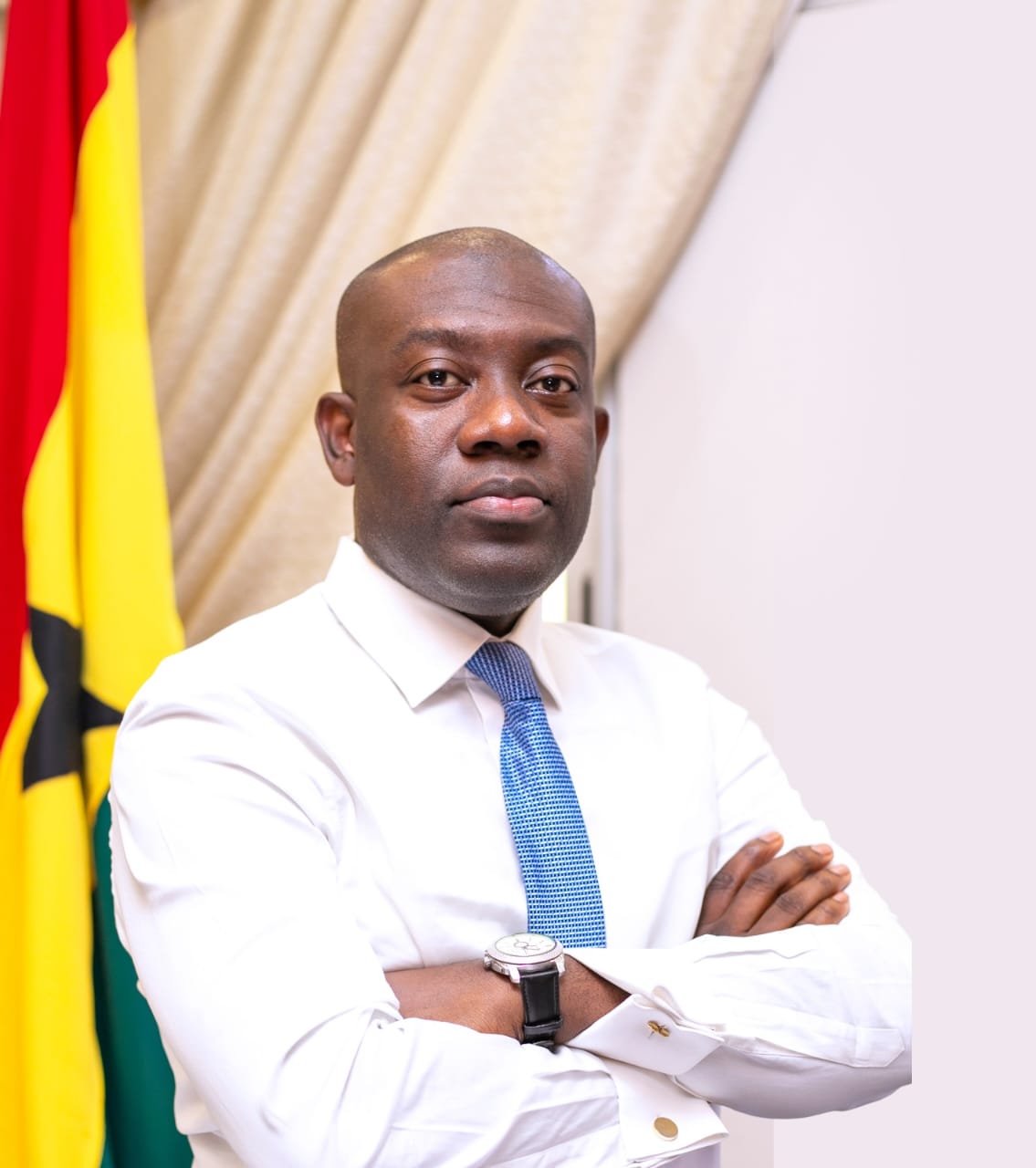

The Ranking Member on Parliament’s Economy and Development Committee and Member of Parliament for Ofoase-Ayirebi, Kojo Oppong Nkrumah has proposed a five-point strategy aimed at addressing Ghana’s growing youth unemployment crisis, warning that current interventions are not delivering the desired results.
Speaking on the floor of Parliament on the rising unemployment situation in the country on Thursday 11th June, 2026, Mr. Oppong Nkrumah described youth unemployment as one of the country’s most urgent socio-economic challenges and called for a more effective and accountable approach to job creation.
“Mr. Speaker, we do not need more slogans or promises that results are in the pipeline. We need a more effective architecture to solve the worsening youth unemployment problem of our country. Data from the Statistical Service is clear. The youth unemployment problem is getting worse. The time to act is now,” he said.
According to him, recent data from the Ghana Statistical Service (GSS) indicates that youth unemployment continues to rise, with the unemployment rate among persons aged 15 to 24 increasing from 32 per cent in December 2024 to 32.5 per cent by the third quarter of 2025.
The Ofoase-Ayirebi MP noted that nearly two million young Ghanaians are currently neither in education, employment nor training, while almost half of young people in the Greater Accra Region are unemployed.
While acknowledging that successive governments have grappled with the challenge, Mr. Oppong Nkrumah stressed that the country must move beyond promises and adopt practical solutions capable of creating sustainable employment opportunities.
“Ghanaian youth do not want slogans. They want feasible programmes that create dignified, productive and well-paid jobs,” he stated.
To address the crisis, the Minority lawmaker proposed the publication of delivery scorecards for all job creation programmes. According to him, employment initiatives should be measured against clear indicators, including the number of beneficiaries, cost per job created, employment retention rates and placement outcomes.
“Anchor every job programme to a published delivery scorecard with clear metrics on beneficiaries, cost per job created, time-to-placement and employment retention,” he urged.
Mr. Oppong Nkrumah also called for a clear distinction between skills training programmes and actual job creation efforts, arguing that training alone cannot solve unemployment if there are no opportunities available for beneficiaries.
As part of his proposals, he advocated a shift from government-led financing to greater private sector participation in job creation. He said government should focus on reducing investment risks, co-investing in strategic sectors and creating a conducive regulatory environment, while private capital drives large-scale employment growth.
The MP further recommended making apprenticeship programmes the backbone of Ghana’s youth employment strategy through national certification, employer support and structured pathways into employment or entrepreneurship.
He also called for the establishment of a credible Labour Market Information System to provide timely data on vacancies, skills gaps and labour demand across the country to support evidence-based policymaking.
This, Mr. Oppong Nkrumah emphasized that the worsening unemployment situation demands urgent action from policymakers and stakeholders.
“We do not need more slogans or promises that results are in the pipeline. We need a more effective architecture to solve the worsening youth unemployment problem of our country,” he said.
He concluded by urging government to adopt bold and measurable reforms to reverse the trend and unlock opportunities for the country’s growing youth population.


Leave a Reply